
Searching for part-time jobs near you can feel like scrolling through an endless void. You type a few keywords into a job board, hit enter, and suddenly you're staring at 2,000 listings. Some are outdated. Some are suspiciously vague. Some want five years of experience for a role that barely covers your gas money.
Sound familiar?
Here's the reality. The jobs exist. Employers are actively looking for part-time workers right now. The challenge isn't availability. It's knowing where to look, how to stand out, and which approaches actually produce results.
Whether you're a student working around classes, a recent graduate testing the waters, or someone who simply needs flexible income without a 40-hour commitment, part-time work offers a practical path forward. But the job search process can drain your time and energy fast if you don't have a clear plan. That's what this guide is for.
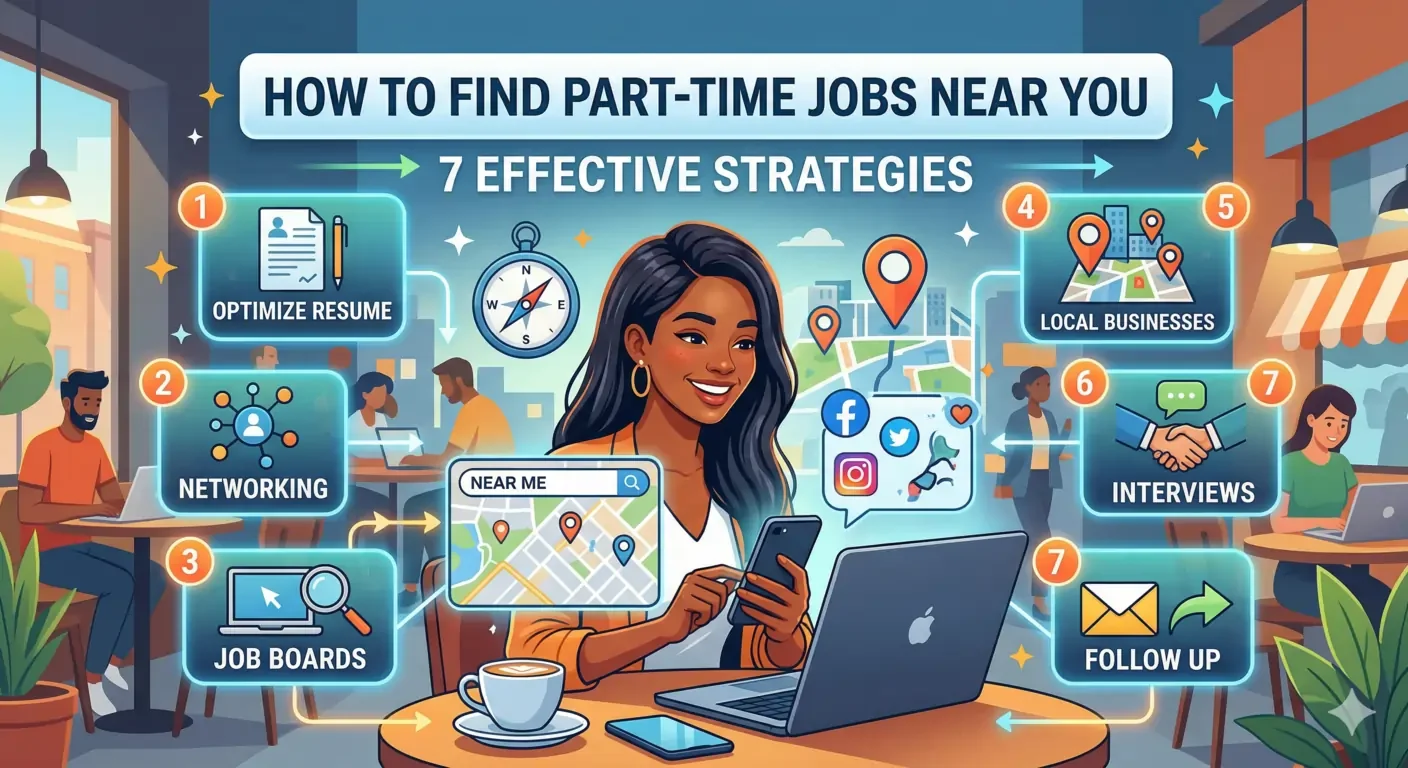
Below, you'll find seven effective strategies to find part-time jobs near you. These aren't recycled tips or vague suggestions. Each strategy includes clear actions you can take this week. Some will feel familiar. Others might surprise you. The goal is to give you multiple paths forward so you can pick what fits your situation and start making real progress.
What Types of Part-Time Jobs Are Available?
Before diving into search strategies, it helps to know what's out there. Part-time work spans nearly every industry, but some sectors hire more frequently than others. Here's a quick overview of common part-time job categories:
| Category | Example Roles | Typical Settings |
|---|---|---|
| Retail | Sales associate, cashier, stock clerk | Stores, malls, boutiques |
| Food Service | Server, barista, host, prep cook | Restaurants, cafes, fast food |
| Customer Service | Call center rep, support specialist | Offices, remote |
| Administrative | Receptionist, data entry, office assistant | Offices, medical clinics |
| Tutoring and Education | Tutor, teaching assistant, test proctor | Schools, learning centers, remote |
| Warehouse and Logistics | Picker, packer, delivery driver | Distribution centers, delivery apps |
| Healthcare Support | Medical receptionist, caregiver, phlebotomist | Clinics, hospitals, home care |
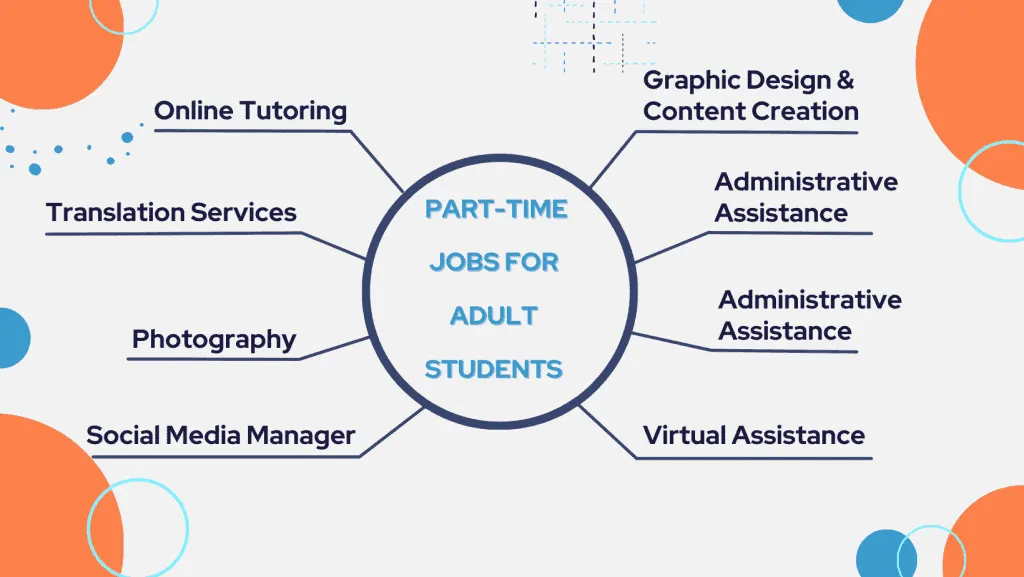
| Freelance and Creative | Writer, designer, photographer, editor | Remote, on-location |
| Hospitality | Hotel front desk, housekeeper, event staff | Hotels, venues, event spaces |
| Fitness and Recreation | Gym attendant, lifeguard, coach | Gyms, pools, recreation centers |
If you're not sure what role fits you, start with two or three categories that match your skills or interests. Searching too broadly wastes time. Searching too narrowly limits your options.
Where to Search: Top Job Platforms
The right platform can make your job search significantly more efficient. Here are the most effective places to find part-time work.
General Job Boards
| Platform | Best For | Notes |
|---|---|---|
| Indeed | Wide variety of listings | Largest job board; use filters aggressively |
| Professional roles, networking | Great for office and remote positions | |
| Glassdoor | Company research and job listings | Read reviews before applying |
| ZipRecruiter | Quick applications | Sends your profile to multiple employers |
| Google for Jobs | Aggregated search | Pulls from multiple sources; search directly in Google |
Part-Time and Hourly Specialists
| Platform | Best For | Notes |
|---|---|---|
| Snagajob | Hourly and shift work | Focused on part-time and flexible roles |
| FlexJobs | Remote and flexible jobs | Paid membership; curated listings, no scams |
| Wonolo | On-demand warehouse and event work | Get shifts quickly through the app |
For Students and Recent Graduates
| Platform | Best For | Notes |
|---|---|---|
| Handshake | Campus recruiting | Connects students with employers; check if your school uses it |
| WayUp | Entry-level positions | Focused on internships and early-career roles |
| College career centers | Local employers | Often have exclusive listings not posted elsewhere |
Sign up for two or three platforms that match your situation. Set up profiles, upload your resume, and turn on job alerts.
Strategy 1: Start With Hyper-Local Job Boards
When most people search for part-time work, they head straight to the big platforms. Indeed. LinkedIn. Glassdoor. These sites are useful, but they come with a problem: everyone else is using them too. A single part-time listing on a major job board can attract hundreds of applications within the first few days. Your resume lands in a stack with 300 others, and unless you have standout credentials, the odds aren't in your favor.
Local job boards change that equation.
What Are Hyper-Local Job Boards?
These are job listing sites that focus on a specific city, region, or community. They attract fewer applicants because fewer people know about them. And the employers posting there are often local businesses who prefer candidates who live nearby.
How to Find Them
Open your browser and search for your city or region plus "job board" or "employment listings." For example: "Austin job board," "Chicago part-time jobs," or "Denver employment listings."
You can also check:
- Community college career pages (they often list local employers seeking part-time help)
- City or county workforce development websites
- Local newspaper websites (many still maintain classified job sections online)
- Chamber of Commerce job boards
Why This Strategy Works
Less competition means better odds. A part-time retail job posted on a city-specific board might get 20 applications. That same listing on a global platform could get 500. When you're starting out or re-entering the workforce, those numbers matter.
Spend 15 minutes today searching for two or three local job boards relevant to your area. Bookmark them. Check them weekly.
Strategy 2: Use Location Filters Like a Pro
If you're going to use major job platforms (and you should, alongside local boards), you need to use them properly. Most people don't. Here's what a typical job search looks like: type "part-time jobs" into the search bar, scroll through pages of results, click on a few that look interesting, get overwhelmed, close the tab. Repeat the next day. This approach is exhausting and inefficient. Filters exist for a reason.
Filters That Matter
| Filter | What to Set | Why It Helps |
|---|---|---|
| Location radius | 10 to 25 miles from your home | Eliminates jobs with unrealistic commutes |
| Date posted | Last 7 days | Prioritizes listings that are still open |
| Job type | Part-time, contract, temporary | Removes full-time roles from results |
| Experience level | Entry-level | Filters out jobs requiring years of experience |
Set Up Job Alerts
Most major platforms let you save your search criteria and receive email notifications when new jobs match. This puts the search on autopilot. Instead of manually checking every day, the listings come to you. Set up alerts for variations of your search such as "part-time jobs in [your city]," "entry-level jobs near [your zip code]," and "flexible jobs in [your industry or field]."
A Note on Remote Jobs
Filtering for "remote" can open up more options, but read the details carefully. Some remote roles are only available to applicants in certain states or countries due to tax and legal requirements. Others require you to work specific hours that might not align with your schedule. Double-check before applying.
Why This Strategy Works
It removes noise. The job search feels overwhelming because you're seeing everything instead of what's relevant. Tight filters narrow the field immediately. You see fewer listings, but they're better matches. That's the goal.
Strategy 3: Tap Into Your Immediate Network
This strategy makes some people uncomfortable, but it's one of the most effective ways to find part-time work. A significant percentage of jobs, especially local, part-time roles, are filled through personal connections before they're ever posted online.
Think about it from an employer's perspective. Hiring is time-consuming. Reviewing applications, scheduling interviews, hoping the person who looks good on paper actually shows up and does the job. If a trusted employee says "I know someone who's looking for part-time work and they're reliable," that shortcut is appealing.
Your network doesn't need to be large or impressive. You're looking for part-time work, and the people who can help are closer than you think.
Who Counts as Your Network
- Family members (parents, siblings, aunts, uncles, cousins)
- Friends and acquaintances
- Former classmates and schoolmates
- Teachers, professors, and mentors
- Neighbors
- People from religious communities, clubs, or social groups
- Former coworkers (if you've worked before)
How to Ask Without Feeling Awkward
Be specific. Instead of saying "I'm looking for a job," try something like: "I'm currently looking for part-time work, ideally something flexible around my class schedule. If you hear of anything in retail, customer service, or admin roles, I'd really appreciate a heads up." Specificity makes it easier for people to think of opportunities. A vague request is easy to forget. A clear one sticks.
The Social Media Approach
A simple post on your social media can reach dozens or hundreds of people at once: "Hey everyone, I'm looking for part-time work in [city]. Open to retail, hospitality, freelance gigs, or anything flexible. If anyone knows of anything or has leads, I'd be grateful." This takes 30 seconds and puts your need in front of your entire network at once.
Why This Strategy Works
People want to help. They just need to know you're looking. A quick conversation or message can put you on someone's radar at exactly the right moment. Personal recommendations carry weight, especially for part-time roles where employers value reliability and trustworthiness.
Strategy 4: Walk Into Local Businesses
This one feels old-school, and maybe that's why it works. While everyone else is submitting online applications and waiting by their inbox, walking into a business with a resume in hand makes you instantly memorable.
For certain types of part-time roles, this approach is highly effective. Retail stores, restaurants, cafes, grocery shops, gyms, salons, and local service businesses often prefer to meet candidates in person before making a hiring decision. A face-to-face introduction can carry more weight than a digital application.
When This Strategy Works Best
- Roles that don't require specialized skills or credentials
- Customer-facing positions (cashier, server, barista, sales associate)
- Businesses with frequent staff turnover that are always looking for reliable workers
- Smaller, independently owned shops that may not post jobs online at all
How to Do It Right
- Identify your targets. Make a list of 5 to 10 local businesses you'd be willing to work at. Think about places you already shop or eat. Familiarity helps.
- Time it well. Visit during slower hours. Mid-morning (around 10 or 11 AM) and mid-afternoon (around 2 or 3 PM) are usually quieter. Avoid lunch rushes and weekend peaks when staff are too busy to talk.
- Dress appropriately. You don't need a suit. Just look neat and presentable. First impressions matter.
- Bring printed resumes. Yes, even if the manager asks you to apply online, having a physical resume to leave behind keeps you top of mind.
- Prepare a brief introduction. Something like: "Hi, I'm [your name]. I live nearby and I'm looking for part-time work. Are you currently hiring, or is there someone I could speak with about opportunities?"
Why This Strategy Works
It shows initiative. Most people take the passive route. They apply online and hope someone notices. Walking in demonstrates that you're willing to put in effort, which signals reliability. For part-time roles where showing up consistently is half the battle, that impression matters.
Strategy 5: Check Company Career Pages Directly
Job boards are aggregators. They pull listings from company websites and display them in one place. But job boards don't always update in real time. A company might post a part-time role on their own career page today, and it might not appear on Indeed or LinkedIn for another few days. By the time you see it on the aggregator, the company has already received a wave of direct applications. Going straight to company career pages puts you ahead of that wave.
Which Companies to Target
Think about businesses near you that typically employ part-time workers:
- Grocery chains and supermarkets
- Retail stores (clothing, electronics, home goods)
- Fast food and restaurant chains
- Pharmacies
- Banks and financial institutions (customer service roles)
- Gyms and fitness centers
- Movie theaters
- Hotels
How to Find Their Career Pages
Run a simple search: "[Company name] careers" or "[Company name] jobs [your city]." For example: "Target careers," "Starbucks jobs Boston," or "CVS employment opportunities." Most companies have a dedicated careers section on their website where they list current openings.
Create a Routine
Pick 5 to 10 companies near you that regularly hire part-time workers. Bookmark their career pages. Check them once a week. It takes ten minutes and keeps you ahead of listings that haven't hit the major boards yet.
Why This Strategy Works
Speed and accuracy. You're seeing listings as soon as they go live. You're applying through the employer's preferred channel. And you're demonstrating interest in that specific company, which can make your application stand out.
Strategy 6: Leverage Gig and Temp Work Platforms
The traditional definition of part-time work usually involves set shifts and a fixed schedule. But the job market has expanded. Gig work and temp agencies offer flexible, location-based opportunities that fit a different lifestyle. If your schedule changes week to week, or you need the freedom to work on your own terms, these platforms are worth exploring.
Types of Gig Work
| Category | Examples |
|---|---|
| Delivery | Food delivery, package delivery, grocery delivery |
| Rideshare | Driving for rideshare apps |
| Tasks and Errands | Furniture assembly, moving help, handyman services |
| Events | Event staffing, promotional work, brand ambassadors |
| Freelance | Writing, design, tutoring, virtual assistance |
| Pet Services | Pet sitting, dog walking |
How Gig Platforms Work
You sign up, complete any required verification (background check, vehicle inspection for drivers), and then choose when and how much you want to work. There's no fixed schedule. You pick up tasks or shifts based on your availability.
The Temp Agency Angle
Staffing agencies connect workers with businesses that need short-term or part-time help. You register with the agency, they match you with available roles, and they handle the placement. Temp roles can range from a single event to ongoing part-time work. Some temp positions even convert to permanent roles if both you and the employer are happy with the arrangement. It's a lower-risk way to try out a company before committing.
Why This Strategy Works
Options and flexibility. Gig work lets you control when you work. Temp agencies do some of the job hunting for you. Signing up for multiple platforms increases your chances of finding consistent work. And if you're new to the workforce, gigs can help you build experience and references quickly.
Strategy 7: Tailor Your Resume and Application for Part-Time Roles
Finding part-time jobs is one thing. Actually landing them is another. Most people send the same resume to every application. That approach works when you're one of five applicants. But for competitive part-time roles, a generic application blends into the background. A few minutes of customization can set you apart.
What Part-Time Employers Care About
Hiring managers for part-time roles have different priorities than recruiters for full-time positions. They're typically asking three questions:
- Are you available when we need you?
- Will you show up reliably?
- Are you easy to work with?
Your resume and application should answer these questions clearly.
Resume Tips for Part-Time Roles
- Keep it short. One page is plenty. Focus on relevant experience, skills, and availability.
- Lead with availability. If you have a flexible schedule, say so near the top. If you're available on weekends or evenings (high-demand times for part-time work), highlight that.
- Emphasize soft skills. Communication, teamwork, problem-solving, time management. These matter more for part-time roles than advanced technical skills.
- Include any experience. Volunteer work, school projects, internships, family responsibilities. If you've done something that shows reliability and initiative, it counts.
Customize Each Application
This doesn't mean rewriting your entire resume for every job. It means making small adjustments. Mention the company by name in your cover letter or application. Reference the specific role you're applying for. Explain briefly why your schedule and skills fit what they're looking for.
A generic cover letter says: "I'm looking for part-time work and I'm a hard worker."
A tailored cover letter says: "I noticed you're hiring for a part-time sales associate role at your downtown location. I'm available weekday evenings and weekends, which aligns with your busiest hours. I've previously worked in customer-facing roles and I'm comfortable handling busy periods."
The difference is obvious to hiring managers.
Why This Strategy Works
Part-time hiring is often fast-paced. Managers don't have time to read between the lines or imagine how you might fit. Make it obvious. A resume and application that clearly demonstrate availability, reliability, and a positive attitude rise to the top quickly.
Remote Part-Time Jobs: A Growing Option
Remote work isn't just for full-time employees. Part-time remote jobs have expanded significantly, offering flexibility that traditional roles can't match.
Types of Remote Part-Time Work
| Role | Description |
|---|---|
| Virtual Assistant | Administrative support, email management, scheduling |
| Customer Support | Answering phones, live chat, email support |
| Data Entry | Inputting and organizing information |
| Content Writing | Blog posts, product descriptions, copywriting |
| Tutoring | Online instruction in academic subjects or languages |
| Transcription | Converting audio to text |
| Social Media Management | Managing business accounts, creating content |
| Graphic Design | Creating visuals, marketing materials |
Pros of Remote Part-Time Work
- No commute. More time, less expense.
- Flexible hours. Many roles let you set your own schedule.
- Work from anywhere. Coffee shop, library, home. Your call.
- Broader options. You're not limited to jobs near your home.
Cons to Consider
- Isolation. Less social interaction than in-person jobs.
- Self-discipline required. No one watching over your shoulder.
- Equipment needs. You may need a reliable computer and internet connection.
- Time zone challenges. Some employers require specific working hours.
How to Find Legitimate Remote Part-Time Jobs
Not all remote job listings are trustworthy. Stick to reputable platforms: FlexJobs (paid, but scam-free and curated), We Work Remotely, Remote.co, LinkedIn (filter for remote), and Indeed (filter for remote).
Legitimate remote employers never ask you to pay for training, equipment, or starter kits. If an offer sounds too good to be true, it probably is.
Red Flags: How to Spot and Avoid Job Scams
Job scams are common, especially for part-time and remote positions. Knowing the warning signs can save you time, money, and personal information.
| Warning Sign | What It Means |
|---|---|
| Asks for payment upfront | Legitimate employers don't charge you to work for them |
| Vague job description | Scammers stay vague to cast a wide net |
| No company name or website | Real employers have a verifiable online presence |
| Unusually high pay for easy work | If it sounds too good to be true, it is |
| Pressure to accept immediately | Real jobs give you time to decide |
| Requests personal financial info early | Your bank account isn't needed before you're hired |
| Communication only through personal email or chat | Legitimate companies use official email domains |
| Asks you to cash checks or transfer money | This is a classic scam setup |
How to Verify a Job Listing
- Search the company name. Look for a website, reviews, and news articles.
- Check for contact information. Real companies have a phone number and physical address.
- Look up the recruiter on LinkedIn. Make sure they're a real employee.
- Search for complaints. Google "[company name] scam" to see what comes up.
- Trust your instincts. If something feels off, walk away.
It's better to miss one opportunity than to lose money or have your identity stolen.
Interview Preparation for Part-Time Jobs
You've applied and landed an interview. Part-time job interviews are generally less formal than full-time interviews, but preparation still matters.
Common Interview Questions for Part-Time Roles
| Question | What They're Really Asking |
|---|---|
| "Why do you want to work here?" | Do you actually care about this job, or is it just convenient? |
| "What's your availability?" | Can you work when we need you? |
| "How do you handle busy or stressful situations?" | Will you stay calm under pressure? |
| "Tell me about a time you worked on a team." | Are you easy to work with? |
| "Why are you looking for part-time work?" | Is this a good fit for your current situation? |
| "What are your strengths?" | What will you bring to this role? |
What to Bring
- ID (driver's license, passport, or state ID)
- A copy of your resume (even if you submitted it online)
- A list of references with contact information
- Your availability written down (helps you answer scheduling questions confidently)
- A notepad and pen (for notes and to jot down names)
What to Wear
Dress slightly better than what you'd wear on the job. For most part-time roles (retail, food service, warehouse), clean and neat casual attire works fine. Business casual is appropriate for office and professional roles.
Follow Up After the Interview
Send a brief thank-you email within 24 hours. Keep it simple: "Thank you for taking the time to meet with me today. I enjoyed learning more about the position and I'm excited about the opportunity to contribute to your team. Please let me know if you need any additional information from me." If you don't hear back within a week, one follow-up email or phone call is appropriate.
What Part-Time Jobs Pay: Setting Realistic Expectations
Pay for part-time work varies widely depending on the role, location, industry, and your experience level.
Average Hourly Rates by Category (US)
| Category | Typical Hourly Range |
|---|---|
| Retail | $12 to $18 |
| Food Service | $10 to $16 (plus tips for servers) |
| Customer Service | $13 to $20 |
| Administrative | $14 to $22 |
| Warehouse | $15 to $22 |
| Tutoring | $15 to $40+ |
| Freelance (varies widely) | $15 to $75+ |
These ranges vary significantly by location. Urban areas typically pay more than rural areas. Before accepting any offer, research what's fair using sites like Glassdoor, Indeed salary data, or the Bureau of Labor Statistics at bls.gov.
Questions to Ask About Compensation
- "What is the starting hourly rate for this position?"
- "Are there opportunities for raises or advancement?"
- "Do part-time employees receive any benefits?"
- "How does overtime work if I exceed my scheduled hours?"
Don't accept a job without understanding the pay structure. Asking about compensation is normal and expected.
Seasonal and Temporary Job Opportunities
Part-time work isn't always permanent. Many employers hire heavily during specific seasons or events. Knowing when these surges happen can help you time your job search for maximum success.
| Season | Industries Hiring | When to Apply |
|---|---|---|
| Holiday (Nov to Dec) | Retail, shipping, customer service | Start applying in September/October |
| Summer | Recreation, camps, tourism, hospitality | Start applying in March/April |
| Back-to-School (Aug to Sep) | Retail, tutoring, campus jobs | Apply in late summer |
| Tax Season (Jan to Apr) | Tax prep services, accounting firms | Apply in December/January |
| Event Season (Spring/Summer) | Event staffing, catering, festivals | Apply 1 to 2 months before major events |
Benefits of Seasonal Work
- Faster hiring process. Employers need people quickly.
- Potential for repeat work. Good performance often leads to invitations back.
- Networking opportunities. Seasonal jobs can lead to permanent positions.
- Flexible commitment. Clear start and end dates fit well around school or other plans.
Tips for Students Searching for Part-Time Work
If you're a student, your job search has an extra layer of complexity. You need income, but you also have classes, assignments, exams, and maybe extracurriculars competing for your time. Finding part-time work that doesn't derail your academic life requires some extra thought.
Start on Campus
Universities and colleges often have part-time roles specifically for students. Libraries, admin offices, student unions, cafeterias, and IT help desks frequently hire student workers. These jobs understand your schedule constraints because they're designed for students. Check your school's career services office. They usually maintain job boards with local employers seeking student workers.
Be Upfront About Your Availability
Employers hiring students expect limited hours. Don't pretend you're available full-time. Be honest about when you can work, including which days, which hours, and how that changes during exam periods. Setting clear expectations upfront avoids problems later.
Consider Remote Part-Time Work
Virtual assistant roles, content writing, tutoring, data entry, and customer support often allow flexible hours and can be done from your dorm or apartment. No commute means more time for everything else.
Use Your Student Status as an Advantage
Some companies specifically seek student workers for campus ambassador roles, promotional events, and internships. Your student status is an asset in these contexts.
Start Small
You don't need a 20-hour-a-week job immediately. Even 8 to 10 hours of part-time work builds experience and references without overwhelming your schedule. You can always add more hours once you find your rhythm.
What If You Have No Experience?
Breaking into the workforce when you have no previous job experience can feel like a frustrating loop. Employers want experience, but how do you get experience without a job? Here's the good news: many part-time roles don't require extensive experience. Employers hiring for entry-level positions know they'll be training new workers. They care more about attitude, reliability, and willingness to learn than a packed resume.
Focus on Entry-Level Roles
Retail, food service, customer support, warehouse work, and delivery are common starting points. Many of these jobs explicitly state "no experience required" or "will train." Look for those phrases in job listings.
Highlight Transferable Skills
Even without formal work experience, you've developed skills. Communication from school projects and clubs, teamwork from group assignments and sports, time management from balancing classes and personal commitments, and problem-solving from navigating challenges in school or personal life. Frame these skills on your resume and in your applications.
Emphasize Reliability and Attitude
For part-time work, showing up consistently matters as much as prior experience. If you've never missed a class, volunteered regularly, or managed responsibilities at home, those are signals of reliability worth mentioning.
Build Experience Through Gig Work
Gig platforms let you start earning and building a track record without going through a traditional hiring process. A few months of completed gigs gives you something concrete to reference in future applications.
Volunteer Strategically
Even a short volunteering stint adds experience to your resume. Event volunteering, community service, or helping at a local organization shows initiative and gives you references.
Common Mistakes to Avoid
| Mistake | Why It Hurts You |
|---|---|
| Applying to everything without reading the listing | Wastes your time and looks lazy to employers |
| Ignoring application instructions | Shows you don't pay attention to details |
| Being vague about availability | Creates uncertainty for hiring managers |
| Not following up after applying | You disappear from their radar |
| Underselling yourself | Makes it harder for employers to see your value |
| Only using one search method | Limits your options unnecessarily |
| Applying only to "perfect" jobs | You miss opportunities that could be a great fit |
| Not preparing for interviews | Makes you seem uninterested |
Consistency beats perfection. A steady effort across multiple strategies produces better results than one perfect application.
What to Do If You're Not Getting Callbacks
If you've been applying and hearing nothing back, don't panic. Silence is frustrating, but it's not necessarily a reflection of your worth. Here's how to troubleshoot.
Revisit Your Resume
- Is it clear and easy to scan?
- Does it highlight availability and relevant skills?
- Are there typos or errors?
- Is it tailored to part-time roles, not just copied from a full-time resume?
Expand Your Search
- Try different keywords and job titles
- Increase your location radius
- Consider industries or roles you hadn't thought of before
Ask for Feedback
If you've made it to interviews but not received offers, politely ask for feedback: "Thank you for considering me for the role. I'm always looking to improve. If you have any feedback on my interview or application, I'd really appreciate hearing it." Not everyone will respond, but the ones who do can offer valuable insights.
Consider Skill-Building
If you're consistently losing out to more qualified candidates, a short course or certification in a relevant area can boost your competitiveness. Many are free or low-cost.
Stay Consistent
The job search is often a numbers game. Keep applying, keep refining your approach, and don't let temporary silence discourage you permanently.
Finding Part-Time Work That Fits Your Schedule
Not all part-time jobs offer the same flexibility. If your schedule changes frequently, or you have commitments that limit your availability, finding the right fit requires some filtering.
- Prioritize gig work and freelance platforms. These give you control over when you work. You pick shifts or tasks based on your availability, not the other way around.
- Look for shift-based roles. Retail, hospitality, and warehouse jobs often use shift scheduling. You may be able to choose shifts each week or swap with coworkers when conflicts arise.
- Be upfront about your availability. Don't wait until after you're hired to explain your constraints. Mention your availability clearly in your application and during interviews.
- Target employers who mention flexibility. Look for phrases like "flexible hours," "work around your schedule," or "ideal for students" in job listings.
Questions to ask during interviews:
- "What does a typical schedule look like for this role?"
- "How far in advance are shifts scheduled?"
- "Is there flexibility to adjust hours if something comes up?"
Frequently Asked Questions
What are the best websites to find part-time jobs near me?
The most effective platforms include Indeed, LinkedIn, Glassdoor, ZipRecruiter, and Snagajob. For students, Handshake is excellent. FlexJobs is ideal for remote and flexible roles. Don't overlook local job boards specific to your city or region.
How do I find part-time work with no experience?
Focus on entry-level roles that offer training: retail, food service, customer support, delivery, and warehouse work. Highlight transferable skills from school or personal projects. Emphasize reliability, positive attitude, and willingness to learn.
How can I make my part-time job application stand out?
Tailor your resume and cover letter to each role. Mention the company by name, reference the specific position, and clearly state your availability. Emphasize soft skills like communication, teamwork, and reliability.
Are gig jobs considered part-time work?
Gig work is a form of flexible, short-term work. It differs from traditional part-time employment because you typically set your own schedule and may work for multiple platforms simultaneously. For income and experience purposes, gig work absolutely counts.
What part-time jobs are best for students?
On-campus jobs, tutoring, retail, food service, freelance work, and remote customer support roles are popular options. Look for employers who understand student schedules and offer flexible hours.
How long does it typically take to find a part-time job?
Most people find part-time work within 2 to 6 weeks of active searching. Using multiple strategies simultaneously tends to speed up the process. Seasonal hiring periods can also be faster.
Should I accept the first job offer I receive?
It depends on the offer. If the pay, schedule, and responsibilities meet your needs, accepting quickly is fine. If something feels off or the terms don't work for you, it's okay to keep searching. Just be honest with the employer about your timeline.
Conclusion
Finding part-time jobs near you doesn't require luck or connections. It requires a plan.
Start by diversifying your approach. Use local job boards alongside major platforms. Master search filters and set up job alerts. Let your network know you're looking. Walk into local businesses. Go directly to company career pages. Explore gig work and temp agencies. And when you apply, tailor your resume and cover letter to show availability, reliability, and a positive attitude.
You don't need to use all seven strategies at once. Pick two or three that fit your style and start there. Consistency beats intensity. A little effort each week adds up.
Part-time work is out there. The employers are hiring. Now you have the tools to find them.
Ready to start your search? Browse current part-time and entry-level job listings on Career Builders and connect with employers looking for candidates like you.