
Here's something nobody tells you while you're finishing your IT degree: knowing how to code or configure a network doesn't mean you know how to get hired. Those are two completely different skills.
You spent years learning technical concepts, passing exams, and building projects. Then you graduate, start applying for jobs, and suddenly realize you have no idea how any of this works. Your applications disappear into the void. You get rejection emails (if you're lucky enough to get any response at all). And you start wondering if you missed something important along the way.
You didn't miss anything. You just weren't taught this part.
The hiring process for IT roles has its own logic, its own stages, and its own unwritten rules. Once you understand how it works, you can prepare for it. And once you prepare for it, your odds improve dramatically.
This guide walks you through the entire process. How companies actually evaluate IT graduates. What happens after you hit "apply." How to prepare for technical interviews and behavioral interviews (yes, both matter). Where to find entry-level jobs. What mistakes to avoid. And what to do if things aren't working.
What Happens After You Hit "Apply"
Most IT graduates have no idea what goes on behind the scenes after they submit an application. Understanding the process takes away some of the mystery and helps you prepare for each stage.
The Typical Hiring Process
While every company is different, most IT hiring follows a similar pattern:
| Stage | What Happens | What They're Evaluating |
|---|---|---|
| 1. Application | You submit your resume online or through a referral | Can we find a reason to keep reading? |
| 2. Resume screening | Software scans for keywords, then a human reviews | Do your skills match the job? |
| 3. Recruiter call | Short phone or video chat (15 to 30 minutes) | Can you communicate? Are you interested? |
| 4. Technical assessment | Coding challenge, skills test, or take-home project | Can you actually do the work? |
| 5. Technical interview | Live problem-solving with an interviewer | How do you think through problems? |
| 6. Behavioral interview | Questions about teamwork, conflict, past experiences | Will you work well with the team? |
| 7. Final interview | Meeting with hiring manager or team | Are you someone we want to work with? |
| 8. Offer | Salary, benefits, start date | Can we agree on terms? |
Not every company uses every stage. Some combine steps. Some skip certain rounds. Startups often move faster with fewer stages. Large corporations tend to have more structured processes.
How Long This Takes
Be patient. This isn't fast.
| Company Type | Typical Timeline |
|---|---|
| Startups | 1 to 3 weeks |
| Mid-size companies | 2 to 4 weeks |
| Large corporations | 4 to 8 weeks |
| Government | 8 to 16 weeks (sometimes longer) |
The waiting is the hardest part. You apply, you wait, you hear nothing. Then you interview, you wait more. That's normal. Don't assume silence means rejection. Companies are slow for many reasons that have nothing to do with you.
How the Process Differs by Role
| Role Type | Technical Assessment Focus | Interview Emphasis |
|---|---|---|
| Help Desk / IT Support | Troubleshooting scenarios, customer service | Communication, patience, problem-solving |
| Software Developer | Coding challenges, system design questions | Technical depth, code quality, collaboration |
| Network Technician | Configuration tasks, networking concepts | Hands-on skills, certifications |
| Cybersecurity | Security scenarios, knowledge questions | Analytical thinking, attention to detail |
| Data Analyst | SQL tests, data analysis projects | Business understanding, visualization |
| QA Tester | Testing methodology, finding bugs | Detail orientation, documentation |
What Companies Actually Look For
Here's where a lot of IT graduates get it wrong. They think technical skills are everything. They're not. Yes, you need to know your stuff. But companies are evaluating a whole package, especially for entry-level roles where they expect to train you anyway.
Technical Skills (But Not the Way You Think)
Companies don't expect you to know everything. You just graduated. They know that. What they're really asking is: Do you have a foundation we can build on? Can you learn new things quickly? Do you understand the basics well enough to grow?
For entry-level roles, they're hiring potential, not expertise. Your job is to show you have something to work with and that you're capable of learning the rest.
Problem-Solving Ability
This matters as much as what you know. Maybe more. Companies want to see how you approach problems. Do you panic? Do you break things down into smaller pieces? Do you ask clarifying questions before diving in? Do you get stuck and give up, or do you push through? Your process reveals more than your answers.
Communication Skills
This is where many technically strong candidates lose offers. Can you explain what you're thinking? Can you talk about complex ideas in simple terms? Can you work with people who don't have a technical background? IT work isn't just about computers. It's about helping people use technology. If you can't communicate clearly, you'll struggle no matter how good your technical skills are.
Projects and Practical Experience
Your resume says what you know. Your projects prove it. Personal projects, class projects, contributions to open-source software, freelance work, anything where you built something real. These show that you can apply your knowledge, not just recite it. You don't need dozens of projects. Two or three solid ones that you can discuss in depth are better than ten abandoned experiments.
Does Your Degree Actually Matter?
Honest answer: yes, it helps. Especially for entry-level roles. Your degree opens doors. It gets you past initial filters at larger companies. It signals that you can learn and complete things. But your degree alone isn't enough. Companies want to see degree plus demonstrated skills plus communication plus attitude. The combination is what gets you hired.
For career changers without IT degrees, the path is harder but not impossible. You'll need more proof: certifications, bootcamps, strong portfolios, and relevant experience.
What Companies Won't Tell You (But You Should Know)
- Interviewers often make initial judgments in the first few minutes. Start strong.
- Being likeable matters more than anyone admits. People hire people they want to work with.
- A referral from an employee can jump you past filters that would otherwise screen you out.
- "Requirements" in job postings are often wish lists. If you meet 60 to 70%, apply anyway.
- Following up after applying or interviewing isn't annoying. It shows genuine interest.
- Some interviewers are bad at interviewing. A confusing interview isn't always your fault.
Entry-Level IT Roles You Should Know About
"IT" covers a lot of ground. Understanding your options helps you target your search.
Overview of Common Entry-Level Roles
| Role | What You'd Do | What Matters Most |
|---|---|---|
| Help Desk / IT Support | Answer technical questions, fix user problems, resolve tickets | Patience, communication, troubleshooting |
| Junior Software Developer | Write code, fix bugs, learn the codebase | Programming skills, problem-solving |
| Network Technician | Set up and maintain network systems | Networking knowledge, hands-on skills |
| System Administrator (Junior) | Manage servers, user accounts, backups | Operating system knowledge, scripting |
| QA Tester | Test software, find bugs, document issues | Attention to detail, methodical thinking |
| Cybersecurity Analyst (Entry) | Monitor systems, respond to security alerts | Security fundamentals, analytical skills |
| Data Analyst (Junior) | Analyze data, create reports, find insights | SQL, spreadsheets, visualization |
| Cloud Support | Support cloud infrastructure, help users | Cloud platform knowledge, troubleshooting |
Which Roles Are Easier to Break Into?
| Role | Barrier to Entry | Why |
|---|---|---|
| Help Desk / IT Support | Lower | High volume of openings, companies expect to train |
| QA Testing | Lower | Often overlooked by grads, consistent demand |
| Junior Developer | Medium | Many openings, but also many applicants |
| Cloud Support | Medium | Growing demand, certifications help a lot |
| System Administrator | Medium | Requires broader knowledge, fewer entry openings |
| Cybersecurity | Higher | Competitive, often wants experience |
| Data Analyst | Higher | Often wants specific skills and portfolio |
Starting in a "lower barrier" role isn't a step down. It's a foot in the door. You can pivot and grow from there.
What a Typical Day Looks Like
Help Desk: You're the person people contact when something breaks. Emails and tickets come in all day. Someone's locked out of their account. Someone's printer won't work. Someone's computer is "slow" (it's always "slow"). You troubleshoot, you explain, you document, you move to the next one. It requires patience and communication more than deep technical expertise.
Junior Developer: You'll spend more time reading code than writing it at first. Understanding how the existing system works is half the job. You'll fix bugs, write small features, and ask a lot of questions. Code reviews, team meetings, and documentation are part of the rhythm. It's collaborative and intellectually demanding.
QA Tester: You break things on purpose. You test features before they go live, trying to find problems before users do. You document bugs, work with developers to reproduce issues, and verify fixes. It requires attention to detail and a systematic mindset.
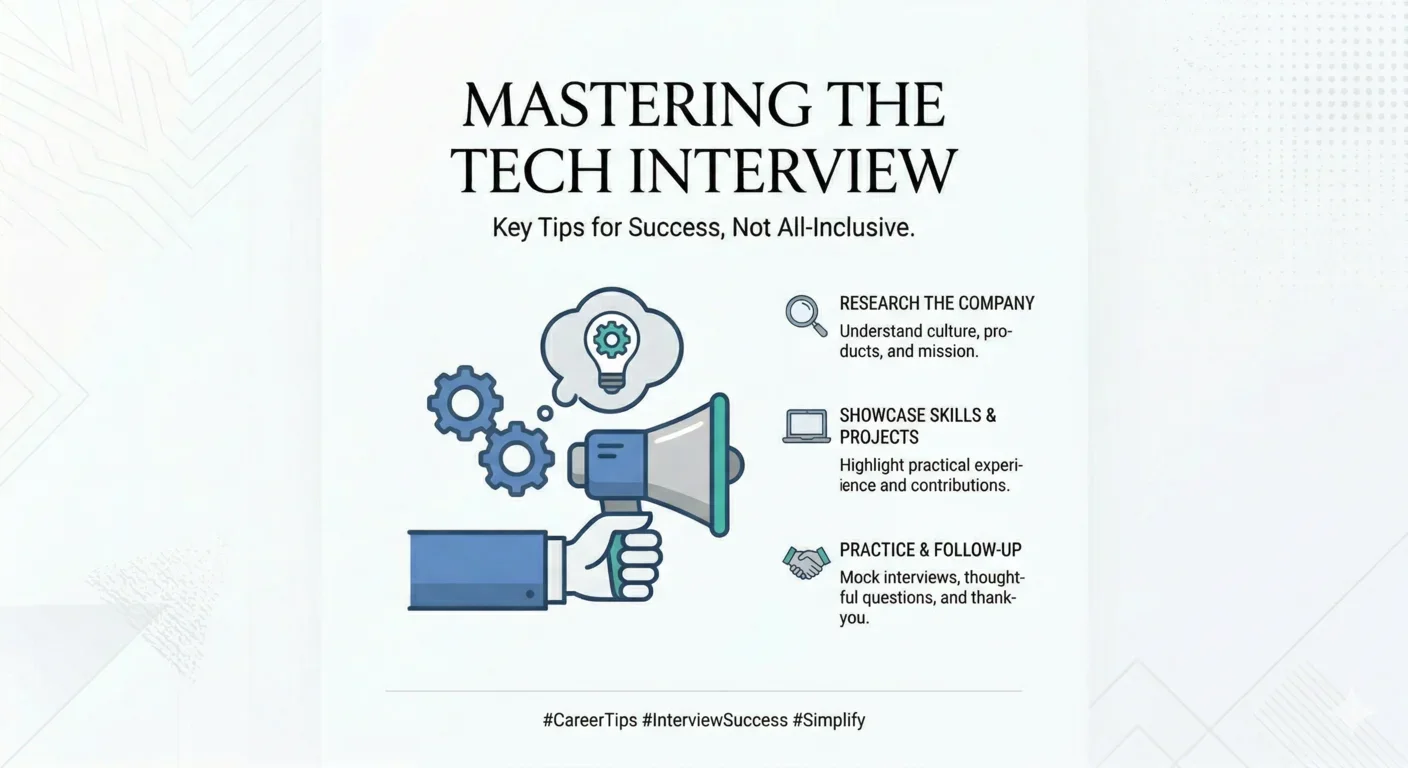
How to Prepare for Technical Interviews
This is where a lot of qualified candidates fail. Not because they don't know the material, but because they haven't practiced the format.
Why Good People Fail Technical Interviews
Technical interviews are a specific skill. Knowing something and demonstrating it under time pressure while someone watches are two very different experiences. Common reasons people struggle:
- They freeze up under pressure
- They jump into solving without understanding the problem
- They work silently instead of explaining their thinking
- They don't know how to recover when they get stuck
- They haven't practiced the format
The good news: this is fixable. Technical interviewing is learnable.
Types of Assessments You'll Face
| Type | What It Is | How to Prepare |
|---|---|---|
| Online coding challenge | Timed problems on a platform (you'll get a link, a deadline, and 1 to 3 problems) | Practice on LeetCode, HackerRank, Codewars |
| Take-home project | Build something over a few days on your own time | Focus on clean code, clear documentation |
| Live coding interview | Solve problems while the interviewer watches (video call or in-person) | Practice explaining your thinking out loud |
| Whiteboard or system design | Design how you'd build a system or architecture | Study common patterns, practice diagramming |
| Troubleshooting scenario | Diagnose a problem (common for IT support roles) | Practice walking through diagnostic steps verbally |
| Technical knowledge questions | Direct questions about concepts and technologies | Review fundamentals, practice explaining simply |
How to Practice Coding Challenges
If you're targeting developer roles, coding practice is essential.
| Platform | Good For |
|---|---|
| LeetCode | Industry standard for interview prep, huge problem library |
| HackerRank | Good range of difficulties, used by some companies directly |
| Codewars | Gamified practice, good for building momentum |
| CodeSignal | Some companies use this for assessments directly |
How to practice effectively:
- Start with easy problems. Build confidence first.
- Set a timer. Real interviews have time pressure.
- Focus on common patterns: arrays, strings, hash tables, basic algorithms.
- When you solve a problem, look at other solutions. There's often a better way.
- If you can't solve something after 30 to 40 minutes, look at the solution, understand it, then try again later without help.
- Consistency beats cramming. 30 to 60 minutes daily is better than 8 hours once a week.
A realistic benchmark: if you can solve medium-level LeetCode problems consistently in 20 to 30 minutes, you're in solid shape for most entry-level technical interviews.
How to Practice Troubleshooting Scenarios
For IT support and help desk roles, you'll face scenario questions instead of coding challenges. Common scenarios include:
- "A user can't access their email. Walk me through how you'd diagnose this."
- "Someone says the internet is slow. What do you do?"
- "A user forgot their password and needs to get into their account urgently."
How to prepare: review common issues (connectivity problems, password resets, software installation, permissions), practice talking through your diagnostic steps out loud, always start by asking clarifying questions (What error message? When did it start? Has anything changed?), and explain your reasoning as you go.
How to Approach Live Technical Interviews
Do this:
- Think out loud. Explain what you're considering, even if you're not sure.
- Ask clarifying questions before you start. Make sure you understand the problem.
- Start simple. Get something working, then improve it.
- Test your solution. Walk through examples to check your work.
- If you get stuck, say so. "I'm stuck on this part, here's what I'm thinking" is much better than silence.
Avoid this:
- Jumping into coding without thinking first
- Going silent while you work (interviewers can't see your thought process)
- Pretending to know something you don't (they can tell)
- Giving up entirely when stuck
- Not testing your solution before saying you're done
Common Technical Interview Mistakes
| Mistake | Why It Hurts | What to Do Instead |
|---|---|---|
| Starting without understanding | You might solve the wrong problem | Ask clarifying questions first |
| Working in silence | Interviewer can't evaluate your thinking | Narrate your thought process |
| Panicking when stuck | Makes it hard to think clearly | Take a breath, explain where you are |
| Refusing to ask for hints | Looks stubborn, not smart | Asking for guidance is allowed |
| Claiming false knowledge | Interviewers catch this quickly | Be honest about gaps |
| Skipping testing | Leaves bugs you could have caught | Walk through examples |
How to Prepare for Behavioral Interviews
This is where many IT grads drop the ball. They spend hours on coding practice and zero time on this. Then they wonder why they didn't get the offer.
Why Behavioral Interviews Matter
Companies have been burned by brilliant people who were impossible to work with. Behavioral interviews help them avoid that. They're trying to assess: How do you work with other people? How do you handle disagreements? What do you do when things go wrong? Can you take feedback? Will you fit with this team?
These questions might feel soft compared to technical challenges, but they carry real weight. Strong technical candidates lose offers here all the time.
What They're Really Asking
| When They Ask This | They Want to Know |
|---|---|
| "Tell me about a time you worked on a team project." | Can you collaborate? |
| "Describe a disagreement with a teammate." | Can you handle conflict professionally? |
| "Tell me about a challenging problem you solved." | How do you approach difficulties? |
| "Tell me about a time you failed." | Are you self-aware? Do you learn? |
| "Describe explaining something technical to a non-technical person." | Can you communicate clearly? |
| "Tell me about a time you went beyond expectations." | Do you take initiative? |
How to Answer: The STAR Method
STAR is a simple framework for structuring your answers:
- Situation: Set the scene. What was happening?
- Task: What was your responsibility?
- Action: What did you specifically do?
- Result: What happened? What did you learn?
Weak answer: "I'm good at solving problems. I always figure things out eventually."
Strong answer: "During my senior capstone project, I was responsible for integrating our app with a third-party API. The documentation was terrible and outdated. I spent a day trying different approaches based on the docs, but nothing worked. So I searched developer forums and found a post from someone who'd had the same issue. I reached out to them, got some pointers, and combined that with my own testing to get the integration working. We finished the project on time, and I documented the entire process so future students wouldn't have the same struggle."
Specific details make your answer real. Prepare 5 to 7 stories total. Most can be adapted to multiple question types. Write bullet points, not scripts. You want to sound natural, not like you memorized something.
How to Prepare Stories in Advance
| Theme | Example Topics to Prepare |
|---|---|
| Teamwork | Group project, team assignment, club activity |
| Conflict | Disagreement with teammate, differing opinions |
| Problem-solving | Technical challenge, debugging, figuring something out |
| Failure | Something that didn't work, a mistake you made |
| Initiative | Going beyond requirements, starting something yourself |
| Learning | Picking up a new skill, adapting to change |
What If You Don't Have "Real" Work Experience?
You have more material than you think.
| Experience Type | How to Use It |
|---|---|
| Class projects | Group assignments are team experiences |
| Personal projects | Building something shows initiative |
| Part-time jobs (any kind) | Customer service, reliability, working with others |
| Volunteer work | Shows initiative and working with people |
| Club or organization involvement | Leadership, collaboration, organizing |
| Helping friends or family with tech | Problem-solving, explaining, patience |
Getting Your Resume Past the Filters
You can be the perfect candidate, but if your resume never gets seen, it doesn't matter.
Why Most Applications Go Nowhere
Large companies receive hundreds of applications for each role. Most use ATS (Applicant Tracking Systems). Think of these as software that scans your resume before a human ever looks at it. The software looks for keywords that match the job description. If your resume doesn't have the right terms, it might get filtered out automatically. This isn't fair. It's just how it works.
How to Get Through the Filters
- Use keywords from the job description. If the listing says "Python," make sure "Python" is in your resume. If it says "troubleshooting," use that word. The software is matching, not interpreting.
- Keep the format simple. Fancy designs, graphics, columns, and unusual fonts can confuse scanning software. Use a clean, standard layout.
- Tailor for each application. Yes, this takes more time. But one tailored application beats five generic ones.
- Lead with relevant information. Put your most relevant experience and skills near the top. Don't bury IT-related content below unrelated work history.
- Quantify when possible. "Improved ticket resolution time by 20%" is stronger than "helped resolve tickets faster."
What Makes a Strong IT Resume
| Section | What to Include |
|---|---|
| Contact info | Name, email, phone, LinkedIn, portfolio/GitHub links |
| Summary (optional) | 2 to 3 sentences about who you are and what you're looking for |
| Skills | Technical skills, tools, languages, platforms (match the job posting) |
| Education | Degree, school, graduation date, relevant coursework |
| Projects | Personal projects, class projects, contributions (brief descriptions with results) |
| Experience | Work history if relevant (including internships, part-time, volunteer) |
| Certifications | Relevant certifications with dates |
Keep it to one page for entry-level. Hiring managers spend seconds on initial review.
The Power of Referrals
Candidates referred by current employees are significantly more likely to get interviews. Referrals come with built-in credibility. Where referrals come from:
- Alumni from your school who work at companies you're targeting
- Professors or advisors with industry connections
- Family friends in tech roles
- Former classmates who are already working
- LinkedIn connections you've built
- People you meet at events or meetups
When asking for a referral, be specific and make it easy for them: "Hi [name], I saw that [company] has an opening for [role] that looks like a great fit for my background. I know you work there. Would you be comfortable referring me for the position? I'd be happy to send you my resume and any details that would help." Most people are willing to help. They just need to know what you're asking for.
Where to Find Entry-Level IT Jobs
General Job Platforms
| Platform | Notes |
|---|---|
| Indeed | Huge volume, use specific searches and filters |
| Networking plus job listings, strong for professional roles | |
| Glassdoor | Research companies, read reviews, see salary info |
| ZipRecruiter | Quick applications, matches you to roles |
| Google for Jobs | Aggregates listings from multiple sources, search "IT jobs near me" |
Tech-Focused Platforms
| Platform | Best For |
|---|---|
| Dice | IT and tech-specific listings |
| Wellfound (formerly AngelList) | Startups and emerging companies |
| Hired | Companies apply to you based on your profile |
Campus and University Resources
Don't overlook what's right in front of you:
- University career services (available to students and often alumni)
- Campus job fairs and recruiting events
- Professor and advisor connections
- Alumni networks and mentorship programs
Many companies specifically recruit from colleges. Your university may have relationships with employers you don't know about.
Government and Public Sector
Government agencies hire IT professionals at all levels. Check USAJobs.gov for federal roles, state government job boards, local municipality and school district positions, and public universities and healthcare systems. Government hiring takes longer, but these jobs often come with stability and good benefits.
Companies That Hire IT Graduates
Large Tech Companies
| Company | Notes |
|---|---|
| Known for rigorous interviews, invests in new grad development | |
| Microsoft | Multiple entry paths, strong learning culture |
| Amazon | High volume hiring, fast-paced environment |
| Apple | Selective, quality-focused culture |
| Meta | Engineering-heavy, technical bar is high |
| Salesforce | Strong onboarding, customer-focused roles |
| IBM | Long history of hiring and training new grads |
| Oracle | Enterprise software, global opportunities |
| Cisco | Strong for networking-focused roles |
| Dell | Hardware and services, various entry points |
Companies With Training Programs
| Company | What They Offer |
|---|---|
| Capital One | Technology programs with rotational opportunities |
| JPMorgan Chase | Analyst programs with structured training |
| Bank of America | Technology analyst roles |
| Accenture | Training academies, certifications funded |
| Deloitte | Structured consulting training |
| Target | Technology programs |
| Walmart | Technology roles across e-commerce and operations |
Contract and Training Pipeline Companies
| Company | Model |
|---|---|
| Revature | Train and place model |
| FDM Group | Graduate program with training |
| Infosys | Large-scale training for new hires |
| Cognizant | Entry-level technology training |
These can be good options for getting your foot in the door, especially if you're struggling to land direct-hire roles. But read the terms carefully. Some require commitments, and contract structures vary.
Don't Forget Non-Tech Companies
You don't have to work at a tech company to have an IT career. Every industry needs IT support, developers, analysts, and technical professionals: healthcare systems and hospitals, financial institutions and banks, manufacturing and logistics companies, retail chains, educational institutions, government agencies, insurance companies, and media and entertainment. Sometimes these "non-tech" companies have less competition for IT roles than the big tech names everyone is chasing.
Should You Work With a Recruiter?
Types of Recruiters
| Type | How They Work | Good for New Grads? |
|---|---|---|
| Internal recruiters | Work for one company, fill that company's roles | Yes, they recruit entry-level |
| External/agency recruiters | Work for staffing firms, fill roles at multiple companies | Sometimes, depends on the agency |
| Staffing agencies | Place you in temporary or contract roles | Often good for getting started |
Staffing Agencies That Work With IT Candidates
| Agency | Notes |
|---|---|
| TEKsystems | IT-focused, entry-level through senior |
| Robert Half Technology | IT and tech placements |
| Insight Global | IT and professional staffing |
| Kforce | Tech and finance |
| Apex Systems | IT staffing, various levels |
| Randstad | Tech placements |
Warning Signs With Recruiters
| Red Flag | What It Means |
|---|---|
| Asks you to pay for placement | Legitimate recruiters are paid by employers |
| Pressure to accept immediately | Good recruiters give you time |
| Vague about the company or role | They should be transparent |
| Doesn't listen to your preferences | Just trying to fill slots |
| Unprofessional communication | Reflects poorly on opportunities they represent |
What IT Grads Actually Experience
What Real IT Grads Say About the Job Search
| What People Report | What It Means for You |
|---|---|
| "It took way longer than I expected" | Budget 3 to 6 months, not 2 weeks |
| "I got ghosted constantly" | Don't take silence personally, keep applying |
| "Referrals made the difference" | Network even if it feels uncomfortable |
| "Technical interviews were intense" | Prepare seriously, practice regularly |
| "I bombed behavioral questions" | Don't skip soft skill prep |
| "Smaller companies responded faster" | Don't only target big tech names |
| "I felt underqualified for everything" | Everyone feels this way, apply anyway |
What People Wish They Knew Before Starting
- Start applying before graduation, not after
- Your university's career center is underrated
- LinkedIn is annoying but it actually works
- Personal projects matter more than GPA
- The first job is the hardest. It gets easier after that.
What's Different About Getting Hired in 2026
| Trend | What It Means for You |
|---|---|
| Remote and hybrid work is standard | More options, but also more competition |
| AI tools in hiring | Some companies use AI for screening and assessments |
| Skills-based hiring growing | Portfolios and projects matter more than ever |
| Technical assessments evolving | More take-home projects, some companies moving away from whiteboard coding |
| Soft skills valued more | Communication and collaboration emphasized alongside technical ability |
Industries Currently Hiring IT Grads
| Industry | Why They're Hiring |
|---|---|
| Healthcare | Digital transformation, electronic records, telehealth |
| Finance and fintech | Security, app development, digital services |
| E-commerce and retail | Infrastructure, logistics technology |
| Cybersecurity | Demand continues to outpace supply |
| Cloud services | Continued migration driving need |
| Government | Modernization projects, retirements creating openings |
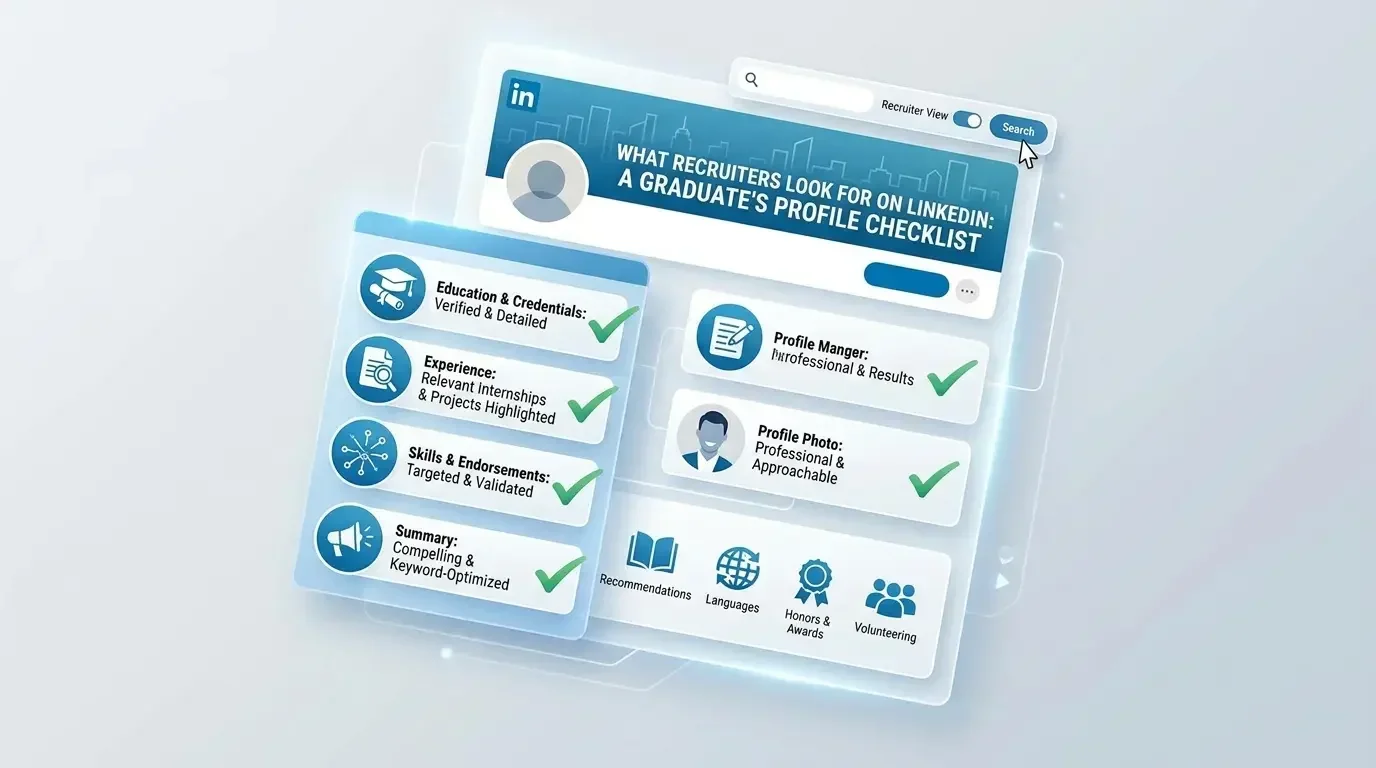
Optimize Your LinkedIn Profile
Recruiters live on LinkedIn. A weak profile means you're invisible.
| Section | What to Do |
|---|---|
| Photo | Professional, friendly, clear face (not a selfie) |
| Headline | Not just "Student." Try: "IT Graduate | [Your Specialty] | Open to Opportunities" |
| Summary | 2 to 3 paragraphs about who you are, what you're good at, what you're looking for |
| Experience | Include internships, projects, relevant part-time work |
| Skills | List technical skills (these are searchable keywords) |
| Featured | Showcase portfolio projects, GitHub, writing samples |
| Education | Degree, school, relevant coursework |
Recruiters search by keywords, location, and job titles. Include relevant skills and technologies throughout your profile, not just in the skills section. Engage with posts, share articles occasionally, connect with alumni and people in your target industry, and respond to messages promptly.
Build a Portfolio That Proves Your Skills
What Makes a Good Portfolio Project
| Quality | Why It Matters |
|---|---|
| Solves a real problem | Shows practical thinking, not just tutorial following |
| Well-documented | Clear README explains what it is and how to use it |
| Clean code | Shows you care about quality, not just functionality |
| Deployed or live version | Shows you can ship, not just build |
| You can explain it | You'll be asked about it in interviews |
Quality over quantity. 2 to 3 solid, well-documented projects beat 10 half-finished ones.
GitHub Profile Tips
- Complete your profile bio
- Pin your best repositories to the top
- Write clear README files for each project
- Keep meaningful commit histories (shows your process)
- Archive or make private anything abandoned or embarrassing
What About Internships?
Internships help. They give you real-world experience, professional references, and sometimes lead directly to full-time offers. But they're not the only path.
If You Didn't Have an Internship
You're not disqualified. You just need other ways to demonstrate your abilities:
| Alternative | How It Helps |
|---|---|
| Personal projects | Shows initiative and real skills |
| Open source contributions | Demonstrates collaboration and working on real codebases |
| Freelance or contract work | Actual client work to reference |
| Part-time tech work | Help desk, lab assistant, tech support |
| Volunteer tech work | Nonprofits need IT help too |
| Certifications | Shows commitment to learning |
Don't apologize for not having an internship. Focus on what you did do: "I didn't have a formal internship, but I spent my time building projects and earning certifications. I also did some freelance work for local businesses. I'm confident I can contribute from day one."
Does GPA Matter?
Some companies (especially large corporations and government) have GPA cutoffs for entry-level roles, often 3.0 or 3.5. Many companies, especially smaller ones and startups, don't care about GPA at all. After your first job, GPA becomes irrelevant.
| Situation | Include GPA? |
|---|---|
| GPA is 3.5 or above | Yes, it can help |
| GPA is 3.0 to 3.4 | Optional, include if job mentions it |
| GPA is below 3.0 | Leave it off unless specifically asked |
If your GPA is low, focus on projects, skills, and relevant experience. Many successful IT professionals had mediocre grades. What you can actually do matters more than your transcript.
Understanding Employment Types
| Type | What It Means | Pros | Cons |
|---|---|---|---|
| Full-time | Permanent employee with benefits | Stability, benefits, career growth | Can be harder to land as a new grad |
| Contract | Fixed period, often through an agency | Easier to land, varied experience | Usually no benefits, job ends |
| Contract-to-hire | Contract with potential to become permanent | Foot in the door, trial period | No guarantee of conversion |
| Part-time | Fewer hours, sometimes benefits | Flexibility | Less income, limited benefits |
| Freelance | Self-employed, project-based | Maximum flexibility | Irregular income, no benefits, you handle taxes |
Salary Expectations and Negotiation
Use these resources to research current rates before any salary conversation: Glassdoor, LinkedIn Salary, Levels.fyi (especially for tech companies), Payscale, and the Bureau of Labor Statistics. Pay varies significantly by role type, location, company size and industry, and your skills and credentials.
Can New Grads Negotiate?
Yes. Many don't because they're afraid to, but negotiation is expected and accepted.
| Item | How Negotiable |
|---|---|
| Base salary | Usually some room, especially with competing offers |
| Signing bonus | Often easier than increasing base |
| Start date | Very negotiable |
| Remote or hybrid schedule | Sometimes flexible |
| Professional development budget | Sometimes available |
| Relocation assistance | If applicable, often negotiable |
Keep it simple: "I'm excited about this opportunity. I was hoping we could discuss the compensation. Based on my research and the skills I bring, I was hoping for [amount]. Is there flexibility there?" The worst they say is no. They're not going to pull the offer because you asked politely.
How to Evaluate Job Offers
| Factor | Questions to Ask Yourself |
|---|---|
| Learning opportunities | Will I grow here? Is there mentorship? |
| Team and manager | Did I like the people I met? |
| Work-life balance | What are the real expectations for hours? |
| Remote or hybrid policy | Does this fit my life? |
| Benefits | Health insurance, PTO, retirement? |
| Growth path | Where could this lead in 2 to 3 years? |
| Company stability | Is this company financially healthy? |
| Commute or location | Is this sustainable long-term? |
What to Do While Job Searching
The search takes months. Use that time well.
| Activity | Why It Helps |
|---|---|
| Build portfolio projects | Gives you something new to discuss |
| Contribute to open source | Shows real collaboration |
| Earn a certification | Adds credentials |
| Freelance or contract work | Builds experience and income |
| Attend meetups and events | Networking and learning |
| Write about what you're learning | Blog posts and articles show communication skills |
| Practice interviews | Daily coding problems, mock interviews |
If asked about a gap after graduation, don't apologize. Focus on what you did: "After graduating, I focused on building projects and improving my skills in [specific area]. I wanted to be as prepared as possible for the right opportunity."
Video Interview Tips
Remote interviews are now standard. Your setup matters.
| Element | What to Do |
|---|---|
| Lighting | Face a window or lamp (not behind you) |
| Background | Clean, neutral, not distracting |
| Camera | At eye level |
| Audio | Test your microphone, use headphones if possible |
| Internet | Wired connection if possible, close other applications |
| Backup plan | Have a phone number ready if video fails |
| Appearance | Dress like you would for in-person |
If something goes wrong, stay calm. Technical problems happen. Interviewers understand. Don't over-explain or panic. If it's unfixable, ask to reschedule.
Questions to Ask Interviewers
"Do you have any questions?" is your chance to show genuine interest.
| Question | What It Shows |
|---|---|
| "What does success look like in this role after 6 months?" | You're thinking about performance |
| "What's the team structure?" | You care about collaboration |
| "What are the biggest challenges for someone in this position?" | You're realistic |
| "How does the team handle learning and development?" | You want to grow |
| "What do you enjoy about working here?" | You're interested in their perspective |
| "What's the next step in the process?" | You're engaged and organized |
Common Mistakes IT Grads Make
Application Mistakes
| Mistake | What to Do Instead |
|---|---|
| Generic resume for every job | Tailor for each role |
| Only applying to dream companies | Cast a wider net |
| Ignoring keywords | Match language from job descriptions |
| No portfolio or projects | Build and showcase real work |
| Not networking | Connect with people, ask for referrals |
Interview and After-Interview Mistakes
| Mistake | What to Do Instead |
|---|---|
| Only preparing technical skills | Prepare behavioral stories too |
| Working silently | Narrate your thought process |
| Pretending to know things you don't | Be honest about gaps |
| Badmouthing past experiences | Stay neutral or positive |
| Not sending thank-you notes | Brief email within 24 hours |
| Taking rejection personally | Learn and move on |
What to Do If You're Not Getting Results
| Situation | What to Consider |
|---|---|
| 50+ applications, no callbacks | Resume and targeting need work |
| 5+ interviews, no offers | Interview skills need focus |
| Months with no progress | Expand to adjacent roles or add skills |
If you're getting interviews but not offers, technical skills may need more practice, behavioral answers may be weak, or communication might be the issue. Request feedback from companies when possible and do mock interviews with friends or mentors.
Realistic Timeline and Expectations
For most new IT grads: 3 to 6 months with consistent effort. Factors that affect timeline include location and local job market, target role and competition level, quality of preparation, networking and referrals, and economic conditions. Some people get hired in weeks. Others take longer. Both are normal.
| Milestone | What It Means |
|---|---|
| Getting callbacks | Your resume and applications are working |
| Reaching technical rounds | You're passing initial screens |
| Positive interview feedback | You're close, keep refining |
| Multiple interviews at once | Momentum is building |
| Receiving an offer | You did it. Now evaluate carefully. |
Your First 90 Days on the Job
Getting hired is just the start. The first few months shape your trajectory.
| Goal | How to Do It |
|---|---|
| Understand your role | Clarify expectations with your manager |
| Build relationships | Meet people beyond your immediate team |
| Deliver something | Even small wins build credibility |
| Ask for feedback | Don't wait for formal reviews |
| Document what you learn | Create your own reference materials |
First week priorities: listen more than you talk (you're learning the culture), write everything down, ask questions rather than assuming, learn names (people notice), and get your systems set up early.
Mental Health and Job Search Burnout
Job searching can feel like a full-time job that pays only in rejection. That wears on you. If you're feeling frustrated, anxious, or demoralized, you're not alone.
| Strategy | Why It Helps |
|---|---|
| Set boundaries | Don't search 24/7, set specific hours |
| Track progress, not just outcomes | Applications sent is progress |
| Celebrate small wins | A callback is a win |
| Talk to people | Don't isolate |
| Take days off | Rest is productive too |
| Move your body | Exercise helps with stress |
| Remember it's temporary | This phase ends |
If you're feeling hopeless, having trouble functioning, or your mental health is seriously suffering, talk to someone. A counselor, therapist, or support service can help.
Resources and Communities
| Community | What It Offers |
|---|---|
| r/cscareerquestions (Reddit) | Advice, experiences, Q&A |
| r/ITCareerQuestions (Reddit) | IT-specific discussions |
| LinkedIn groups | Industry networking |
| Discord servers | Real-time chat with others |
| Local tech meetups | In-person connections |
| Resource | What It Offers |
|---|---|
| LeetCode (free tier) | Coding practice |
| HackerRank | Coding challenges |
| Pramp | Free mock interviews with peers |
| YouTube | Tutorials for everything |
Frequently Asked Questions
How long does it take to get an IT job after graduation?
Typically 3 to 6 months with consistent effort. Some people get hired faster, some take longer. Both are normal. Factors include your preparation, target roles, location, networking, and market conditions.
Do I need certifications if I have a degree?
Not always required, but they can strengthen your application, especially for support, networking, cloud, and security roles. Certifications show commitment and verify specific skills.
What if I have no internship or work experience?
Focus on projects, coursework, and transferable skills from any jobs. Build portfolio projects. Contribute to open source. Volunteer tech work counts too.
Should I apply if I don't meet all the requirements?
Yes, if you meet most of them. Job "requirements" are often wish lists. If you meet 60 to 70%, apply anyway.
How many jobs should I apply to?
Quality over quantity, but aim for consistent volume. 5 to 15 tailored applications per week is reasonable.
Is it okay to apply for multiple roles at the same company?
Generally yes, if you're genuinely qualified for each. Don't spam every opening, but 2 to 3 relevant roles is fine.
How do I negotiate salary as a new grad?
Research market rates first. Then ask politely: "I'm excited about this opportunity. Based on my research and skills, I was hoping for [amount]. Is there flexibility?" The worst they say is no.
What should I do while waiting to hear back?
Keep applying, keep practicing. Never wait on one opportunity. Assume nothing until you have a written offer.
How do I handle rejection?
Learn from it if you can, then move forward. Rejection is normal and usually not personal. Most successful people faced plenty of rejection along the way.
Should I take any job just to get experience?
It depends. A relevant role builds your career. An unrelated role fills income gaps but may not advance your IT path. Balance based on your financial situation and long-term goals.
Is it worth using a recruiter as a new grad?
It can be, especially through staffing agencies that work with entry-level IT candidates. Just understand how the relationship works and watch for red flags.
Conclusion
Getting your first IT job is a process. It takes longer than you expect, requires skills nobody taught you in school, and tests your patience along the way. But it's learnable. Every step of this process can be prepared for.
- Companies hire potential for entry-level roles. They know you're new. They're betting on who can learn and grow.
- Technical skills get you in the door. Communication, problem-solving, and attitude get you the offer.
- Preparation beats winging it. Every time.
- Referrals and networking open doors that applications alone don't.
- Rejection is normal. It's not a reflection of your worth. Keep going.
- The first job is the hardest. Once you have experience, everything gets easier.
Start somewhere this week. Update your resume. Practice one coding problem. Send one networking message. Apply to one tailored job. The opportunities are out there. Now you know how to find them.
Ready to start your search? Browse current IT and entry-level job listings on Career Builders and connect with employers looking for new graduates.